
Walk the Walkerville Wildlife Trail
From curious parrots to playful possums, and kooky kookaburras to mysterious bats – embark on our Walkerville Wildlife Trail and discover the incredible native animals thriving in our wildlife boxes. Follow the trail and spot these fascinating creatures while exploring our beautiful parks!
In 2022, Town of Walkerville engaged fauNature to install, maintain and monitor 29 wildlife boxes along Linear Park to enhance habitat for hollow-dependent wildlife. After much success, Council continued the trail in July 2024, with the installation of an additional 30 wildlife boxes, extending the trail from Frome Reserve, Vale Park to Howie Reserve, Walkerville.
Wildlife boxes aid animals in the area that utilise tree hollows. Around 350 Australian wildlife species need tree hollows to breed and survive. Over the past three years, fauNature has recorded active Ringtail Possums, Rainbow Lorikeets and Galahs, just to name a few of the species residing in the wildlife boxes around the Township.
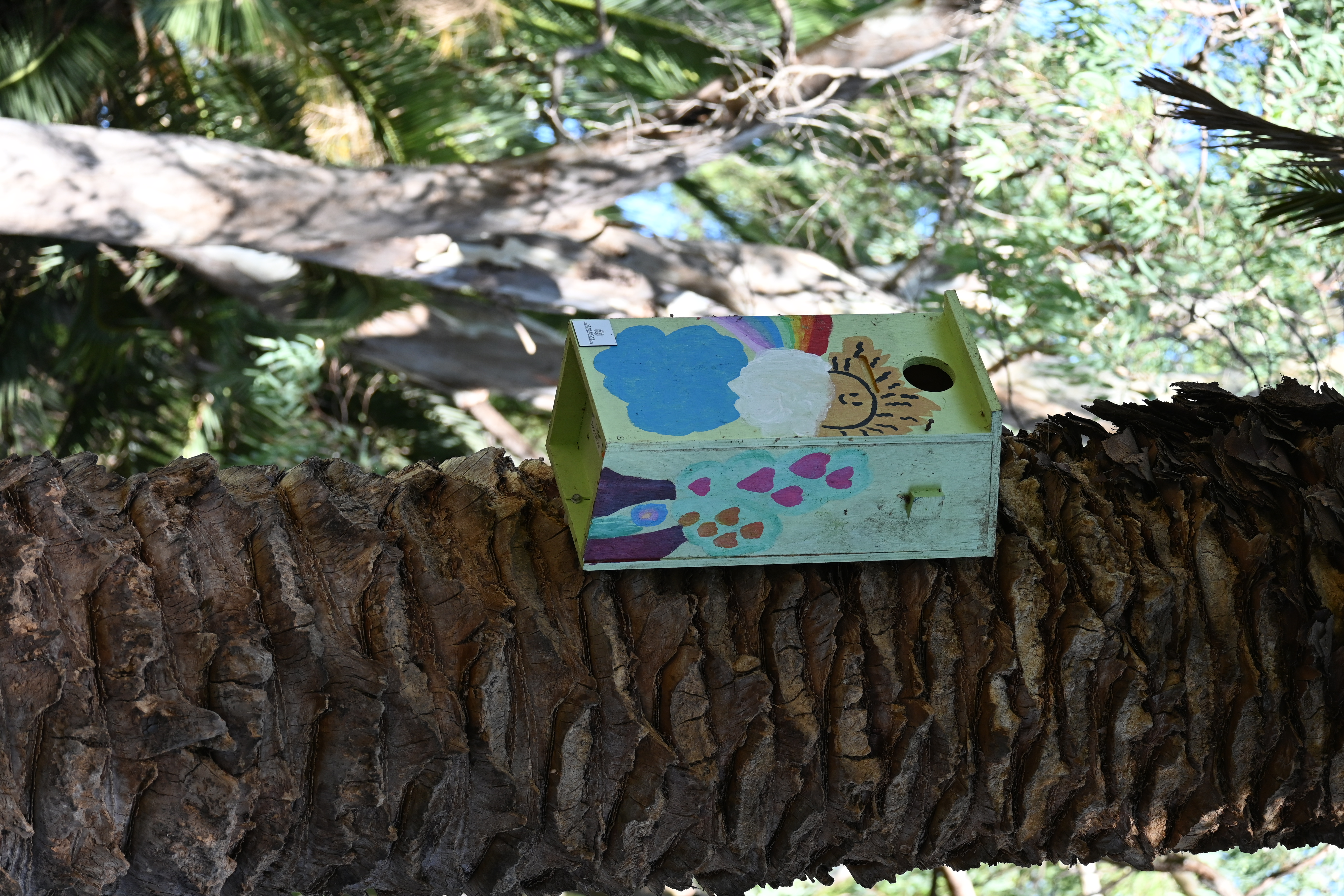
All 59 wildlife boxes on the trail have been decorated by local school students in the area, with this project raising environmental awareness for both the school children and the wider community. Unique identifying numbers have been affixed to the base of each box for asset management and recording purposes.
To follow the trail and spot various wildlife boxes and species located across our parks, see our interactive map below.
With Australia having the most hollow-dependent wildlife in the world, Town of Walkerville wants to ensure its fauna is being looked after. It can take a substantial number of years (100+) for trees to start forming hollows. With the loss of many older trees and habitat clearance across South Australia, it doesn’t leave many natural hollows left for our wildlife to utilise.
Town of Walkerville engaged James from fauNature to work on this project to make a positive impact on the local hollow-dependent wildlife and raise environmental awareness in the Township. fauNature’s wildlife boxes are all built locally in South Australia and are designed especially for animals to breed and survive by providing the ideal alternative to a natural hollow.
As an advocate for wildlife in South Australia for over two decades, James surveyed sites and met with staff to put together a strategy for Council's environmental needs and provided advice on the suitable products for the various locations across the Township.
Certain considerations were taken on how each wildlife box would be installed, which is dependent on what fauna it is designed for. Many of Council's wildlife boxes are installed between 4-7m high on Eucalyptus trees. They have been positioned in ways that are protected from the sun and wet winds.
fauNature continues its support of Council's wildlife boxes with half-yearly monitoring and maintenance to ensure all boxes are in good condition. During James’ maintenance work, wildlife activity is recorded, the boxes are cleaned out as required and new nesting materials are added. A full report is supplied to Council and available on this webpage. This report is also distributed to the local schools involved in the project for further education in class.
The approach Council has taken with this project is positively impacting the local hollow-dependent fauna in the Township. The wildlife boxes have been in service for three years with utilisation at over 70%. It is common to take over five years to reach this level of occupancy.
Town of Walkerville has a variety of colourful boxes for all kinds of wildlife, of the 59 boxes there is:
- 12 brushtail possum boxes;
- 24 medium parrot boxes;
- 13 small parrot boxes;
- two large parrot boxes;
- six bat boxes;
- one boobook box; and
- one kookaburra box.
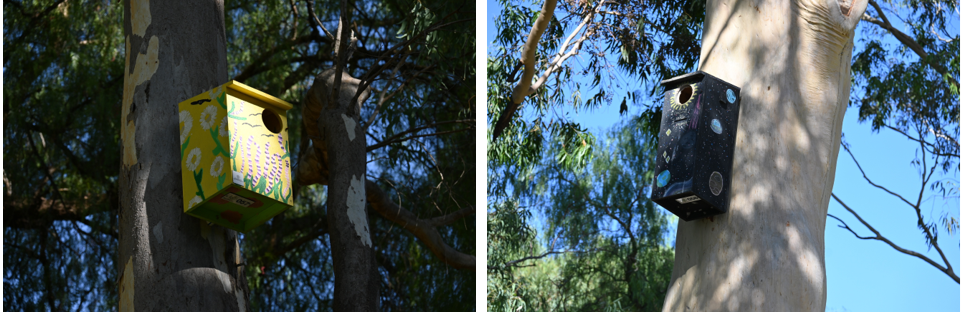
Photos of wildlife boxes painted by local school children
Town of Walkerville’s wildlife boxes were well utilised by the local fauna in 2024. At the time of fauNature’s spring survey, 37% were in use. fauNature reported that 16 boxes appeared empty and unused, including all six bat boxes. Thirteen of the empty boxes were from the July 2024 install and it suggests local wildlife either had not found or were not comfortable with the new resources.
fauNature indicated that 11 nesting events occurred in the small parrot boxes and/or medium parrot boxes, with a single breeding event by Rainbow Lorikeets. Two Galah breeding events were observed with one egg and one chick at Howie Reserve and the second, a single chick at Hamilton Reserve.
No microbat’s were recorded and fauNature have said that they are generally slow to inhabit wildlife boxes.
Feral bees were found in a small percentage of the wildlife boxes and, unfortunately, are an environmental threat. An apiarist will be engaged to safely remove and rehome these bees.
fauNature reported a range of ‘non-box resident wildlife’ species in some locations. Noisy Miners and Rainbow Lorikeets were most widespread, however, to find out what other wild species frequent Council's parks and reserves and for more in depth report, check out our latest Wildlife Box Monitoring Report from fauNature.
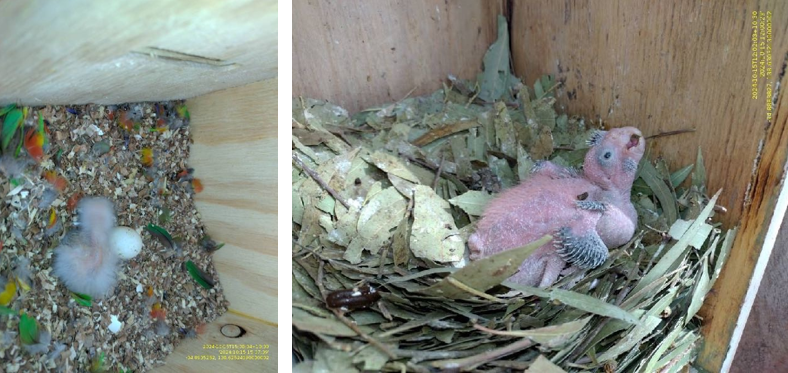
Photos taken upon routine monitoring by fauNature